
In-Wall TV Wire Concealment in Lake Forest
TV Mounting Point Lake Forest covers concealing TV cables inside the walls of Lake Forest homes — a straight drop from behind the screen to a console in an El Toro tract living room, a Foothill Ranch great room or a Lake Forest II townhome — with in-wall rated power parts and CL3 HDMI, so nothing hangs below the TV.
Bookings aren't open yet. Leave your name and number; your message is recorded, and you'll get one message when a local installer is available.
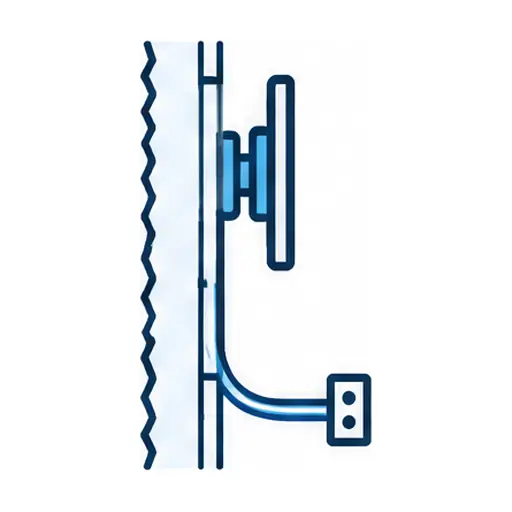
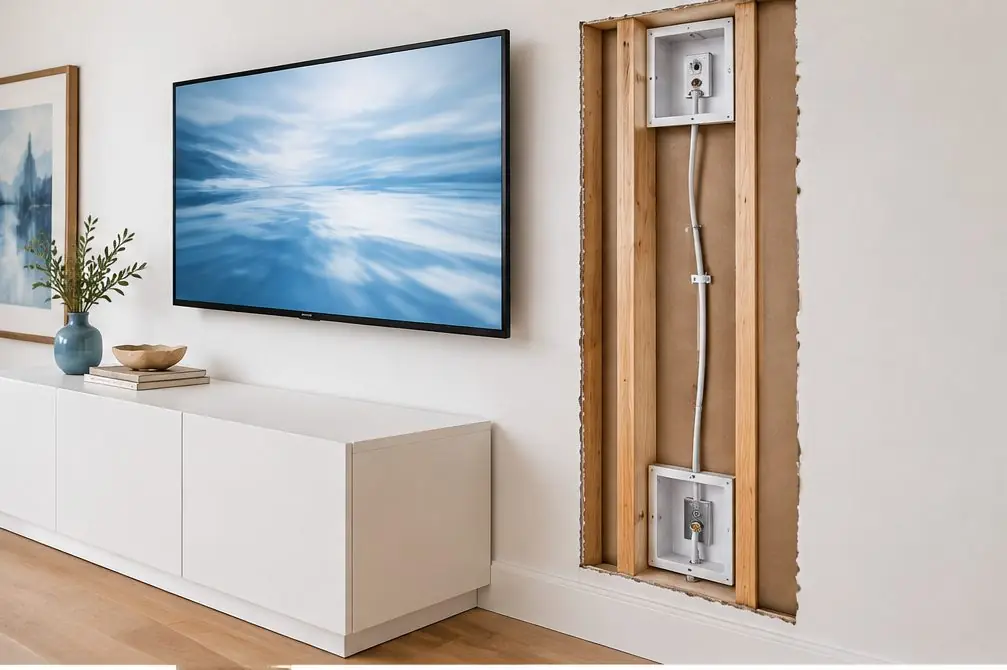 Illustration
In-Wall Wire Concealment in Lake Forest, CA typically runs $189–$574 per TV in our 2027 estimator, depending on the TV size and the wall type. Use the estimator below for your own numbers.
Only rated parts go behind the drywall
The point of hiding wires is a clean wall, but the rule underneath is fire safety. Electrical code does not allow an ordinary appliance cord inside a wall cavity, and that includes the TV's own power cord.
- Allowed inside: a power-bridge kit made for in-wall use, HDMI and other low-voltage cable marked CL2 or CL3, speaker wire marked for in-wall use.
- Never inside: the TV's plug-in cord, an extension lead, a power strip, any cord without an in-wall rating.
How a rated kit is fitted
A power-bridge kit works like an extension, but legally: a recessed box behind the screen holds a receptacle, a second box near the floor holds an inlet, and in-wall rated cable joins them inside the same stud bay. A short cord from the lower inlet plugs into the outlet that is already there.
HDMI and other signal cables come out of the wall through a brush plate next to the upper box and back in at the bottom. The installer cuts both openings from the room side and fishes the cables down between the studs.
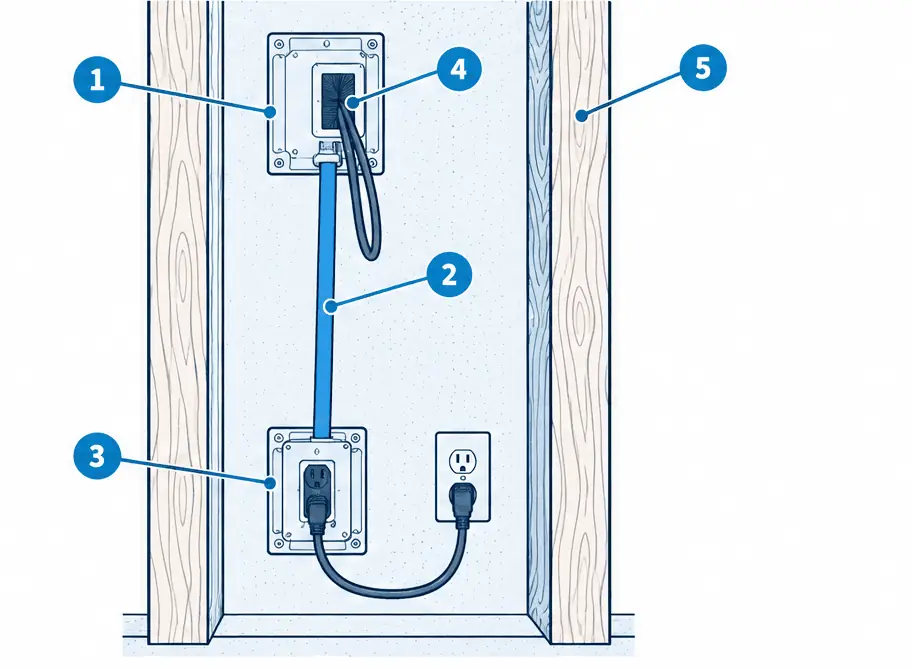
What the numbers show
- Upper recessed box The box behind the screen holds the receptacle the TV plugs into.
- In-wall rated cable Cable rated for in-wall use runs inside the bay between the two boxes.
- Lower inlet box Near the floor, this box takes power from a short cord to an outlet already there.
- Signal pass-through A brush plate lets the HDMI leads enter the same bay.
- Stud bay The space between two studs is the protected path for the cable.
What can block the drop
Two-story tract houses and newer homes often have a horizontal fire block about halfway down the stud bay. Drilling through one is allowed in some cases and avoided in others; the alternatives are a different bay, a route along the floor in the next room, or a surface raceway.
| What is found | Usual answer |
|---|---|
| Fire block mid-bay | Another bay, a short notch where allowed, or a raceway |
| Wall shared with a neighbor | Move the TV to an interior partition |
| Insulated exterior wall | Fishing is slower; a raceway is sometimes cleaner |
| Metal studs | Grommets in every hole the cable passes |
In-Wall Wire Concealment — common questions
Can the TV's own power cord be pushed into the wall?
No. Only cables and kits rated for in-wall use go inside; the plain cord stays outside.
Is a permit needed to hide TV wires?
Not for a plug-in kit that uses an existing outlet; a new outlet or circuit is permitted electrical work done by an electrician.
Availability & price range
In-Wall Wire Concealment: check availability and price range
Bookings aren't open yet — answer a few quick questions about the TV and the wall and get a typical Lake Forest price range right here. Typical Lake Forest prices for one TV, labor only unless an option says otherwise. This is a market estimate, not a quote.