
TV Mounting Point Lake Forest: TV Wall Mounting in Lake Forest
TV Mounting Point Lake Forest covers everyday TV wall mounting across Lake Forest — living rooms, bedrooms and dens in tract houses, townhomes and newer villages — where a local installer finds the studs behind walls of every age, hangs a fixed or tilting bracket and leaves the cords tidy.

Bookings aren't open yet. Leave your name and number; your message is recorded, and you'll get one message when a local installer is available.
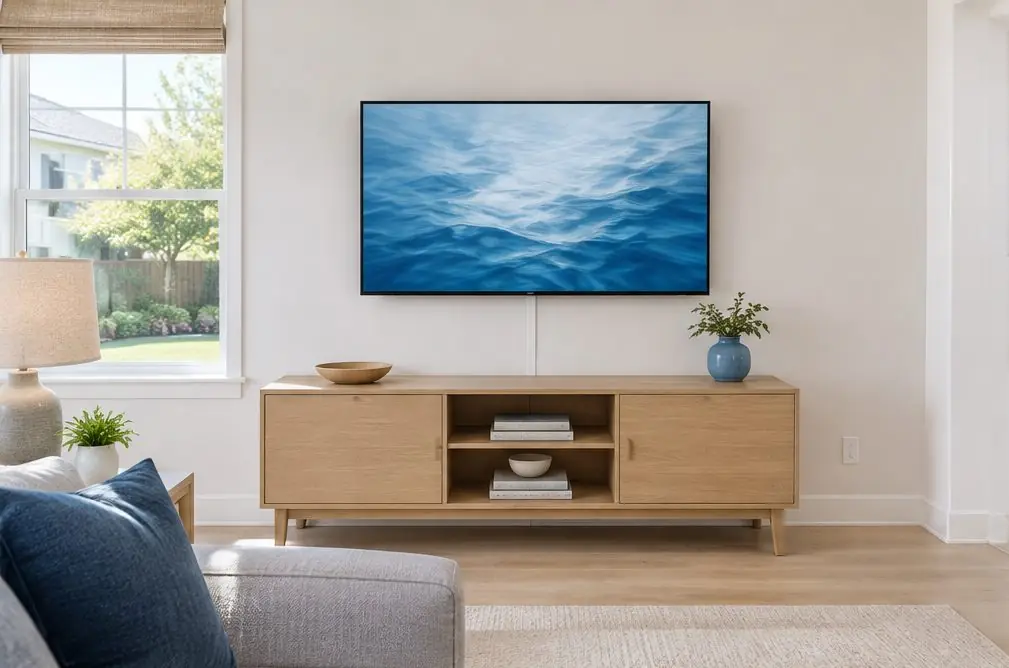 Illustration
From stud finder to hung screen
The order of work matters more than the speed.
- Match the bracket. The TV's weight and hole pattern are read first, and the bracket must be rated at least 1.5 times the weight.
- Locate the wood. A finder marks the studs and a small probe hole under the future plate confirms the edge.
- Outline the screen. Tape on the wall shows the size and height; a minute on the sofa decides whether it looks right.
- Fasten the plate. Pilot holes, lag bolts and a level, snugged until the plate lies flat.
- Hang and lock. The TV hooks on, the lock screws go in, and the level is read again with the weight on.
- Finish. Cords are dressed to the outlet and the household is shown how the tilt works.
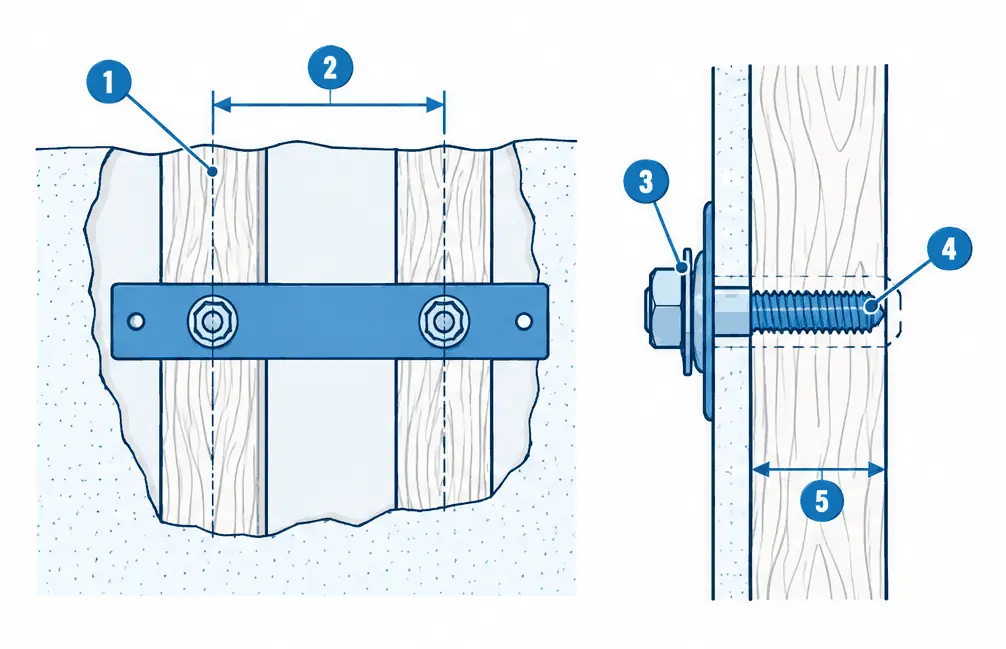
What the numbers show
- Stud center line Each bolt is driven on the center line of its stud, found with a finder and a probe hole.
- Stud spacing Studs sit about 16 inches apart, so a wide plate can reach two of them.
- Washer and head A washer under the hex head spreads the clamping force over the plate.
- Threads in solid wood The threads bite into the middle of the stud and stop inside it.
- Depth into the stud The bolt reaches well into the wood beyond the thickness of the drywall.
When no stud sits where the screen goes
Studs in wood-framed Lake Forest homes are usually about 16 inches apart, but older tract walls and remodeled rooms do not always follow the pattern. A wide plate reaches two studs while the picture stays centered, and a plate with sliding brackets shifts the set a few inches without moving the holes.
- Strap toggles open behind drywall like a bar and spread the load along a strip.
- A backer board screwed across several studs gives a big screen a solid face.
- Split fixing puts one side of the plate on lag bolts and the other on toggles.
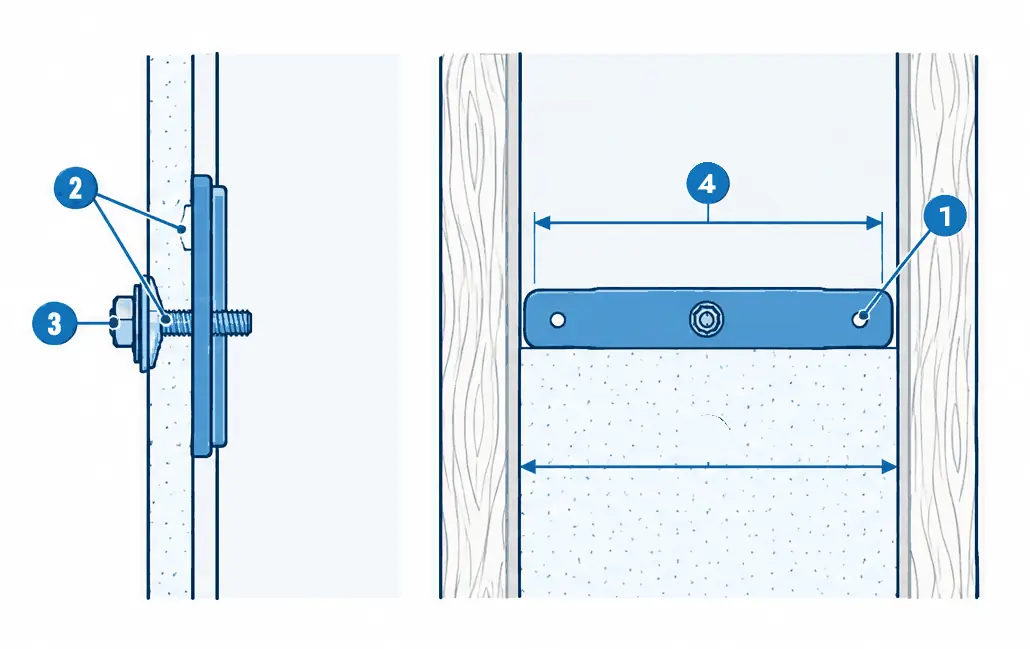
What the numbers show
- Steel channel A flat channel lies against the back of the drywall and is much longer than the hole is wide.
- Plastic straps Two thin straps pull the channel snug and are snapped off flush with the wall face.
- Machine bolt A bolt passes through the plate and threads into the middle of the channel.
- Spread load The channel spreads the load across a wide strip of drywall instead of the edge of a hole.
Plaster in some older El Toro walls
Most Lake Forest homes have drywall, but a few houses on the oldest streets of the former El Toro have plaster over lath. Plaster chips under a fast bit and lath hides studs from many finders, so the installer drills with a carbide bit at low speed with the hammer off, proves each stud with a small test hole and fastens only into wood. The bolts are longer than for drywall.
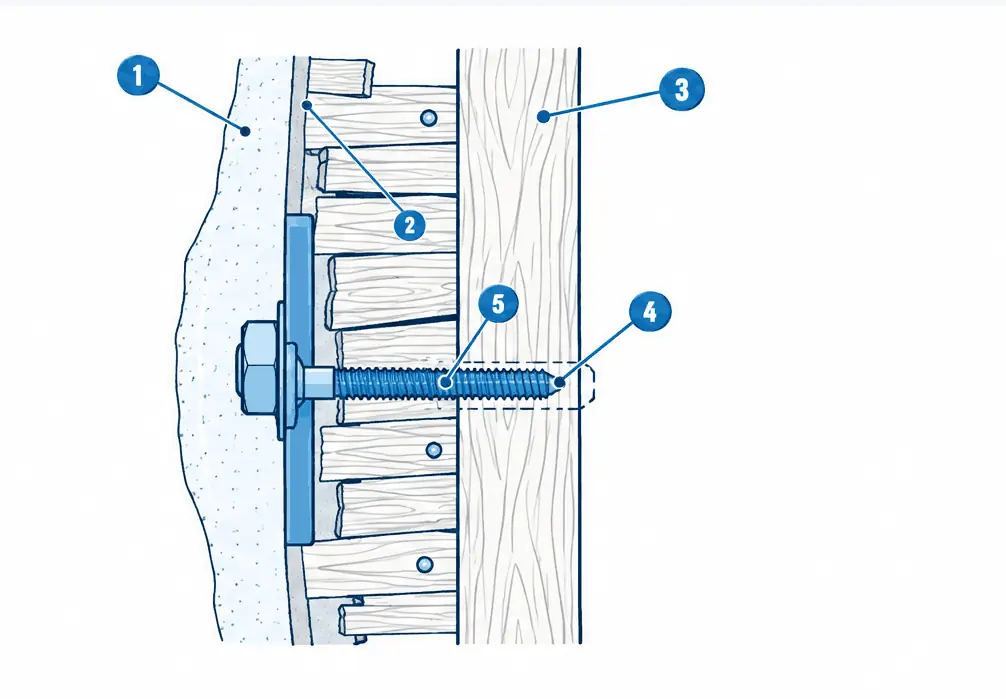
What the numbers show
- Plaster coat The hard plaster layer is thick and brittle and only has to stay in place.
- Lath strip Narrow wood strips nailed across the studs hold the plaster and hide the framing.
- The stud behind The solid stud behind the lath is the only fixing point.
- Pilot hole A pilot hole is drilled slowly first so the plaster does not crack.
- Longer lag bolt The bolt is long enough to pass through plaster and lath and bite deep into the stud.
Choosing the height in a lower-ceiling room
Tract-home living rooms have standard eight-foot ceilings, which makes the screen easy to hang too high. The installer takes the actual seat, marks the eye line on the tape and centers the screen near it; a few degrees of tilt are added only when the picture has to ride higher.
TV Wall Mounting — common questions
How much does a basic TV wall mount cost in Lake Forest?
Expect roughly $99–$139 for a 32–49 inch set and $119–$175 for 50–65 inches on drywall over wood studs in 2026. Bigger TVs and harder walls move the figure up.
Who supplies the bracket?
Either side can. If the installer supplies one, the add is $40–$125 by type and size; a bracket already owned is first checked against the set's weight.
Availability & price range
TV Wall Mounting: check availability and price range
Bookings aren't open yet — answer a few quick questions about the TV and the wall and get a typical Lake Forest price range right here. Typical Lake Forest prices for one TV, labor only unless an option says otherwise. This is a market estimate, not a quote.